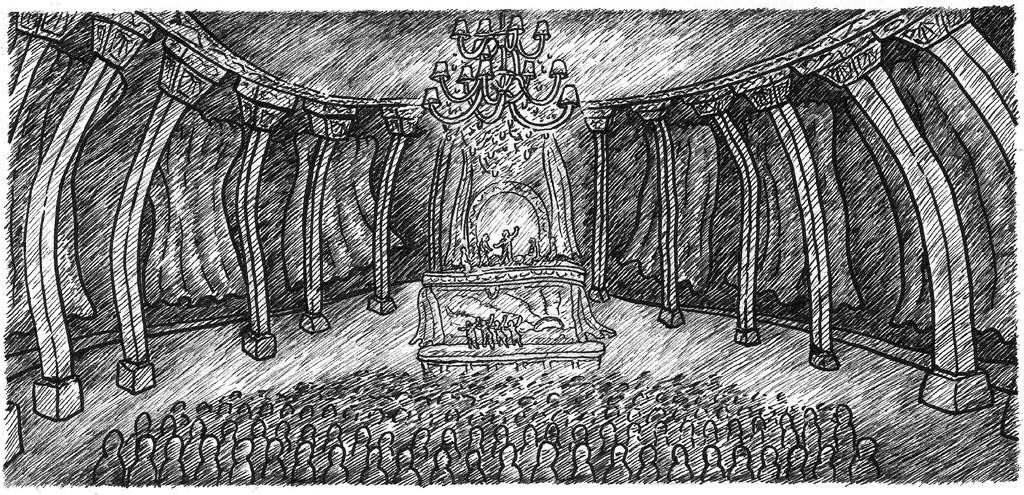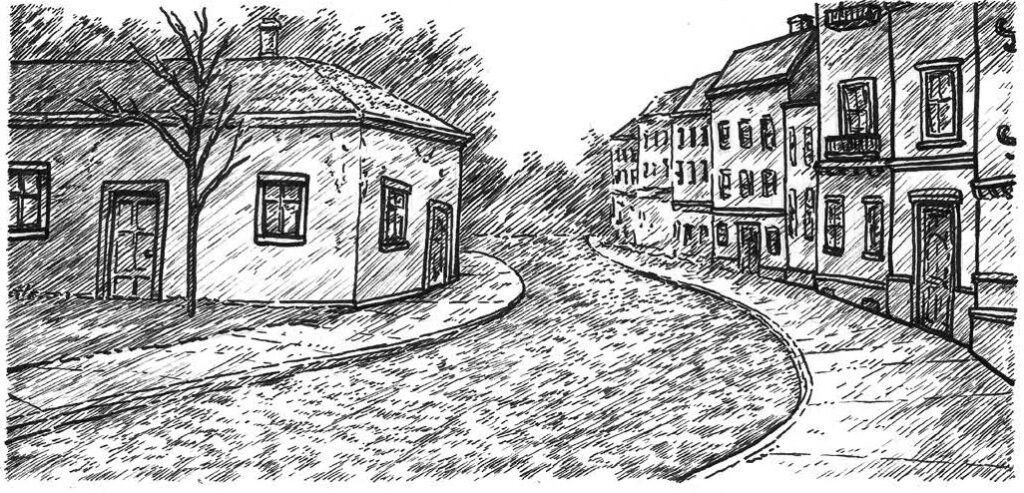
When I first started researching Częstochowa, where Maria spent most of her childhood, I didn’t realize how much I already knew about this small Polish city. For decades, my grandmother Lola Lackman had told me about her birthplace, which she pronounced, “CHANCE-lick-off,” but I didn’t know this was Częstochowa until one day, deep into the Maria Lani research, I happened to see Lola write it down. (Forehead smack!)
My grandmother remembered her Częstochowa of the 1920s and ’30s as a city full of music. Many family members played instruments, and they all loved going to concerts. She and her friends also enjoyed strolling the boulevards, people-watching and gossiping.
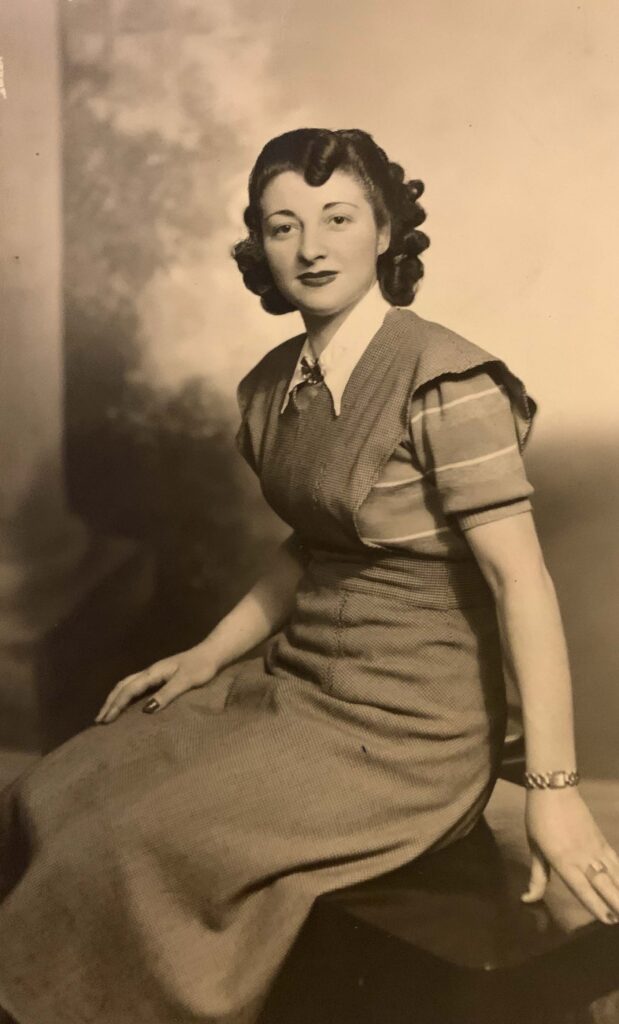
(My grandmother, born Lola Szlamkiewich)
One teenager that they often spied on and whispered about was Solomon Lachmann, a spoiled only child who spent most of his time taking various dates to the cinema, until, shortly before the war broke out, he was smitten by and committed to one woman. (Not Lola.)
Six years later, my grandmother was lying in a Brussels Red Cross hospital, reeling from the typhus she’d contracted in the Bergen-Belsen concentration camp. Sol, having escaped from Treblinka and spent the remaining two years of the war jammed with a handful of other survivors the root cellar of a sympathetic farmer, traversed medical the ward searching for relatives and his fiancée (in vain). “Sol!” Lola called out weakly, and when he came over, she said, “You don’t know who I am, but I know who you are,” and they laughed.
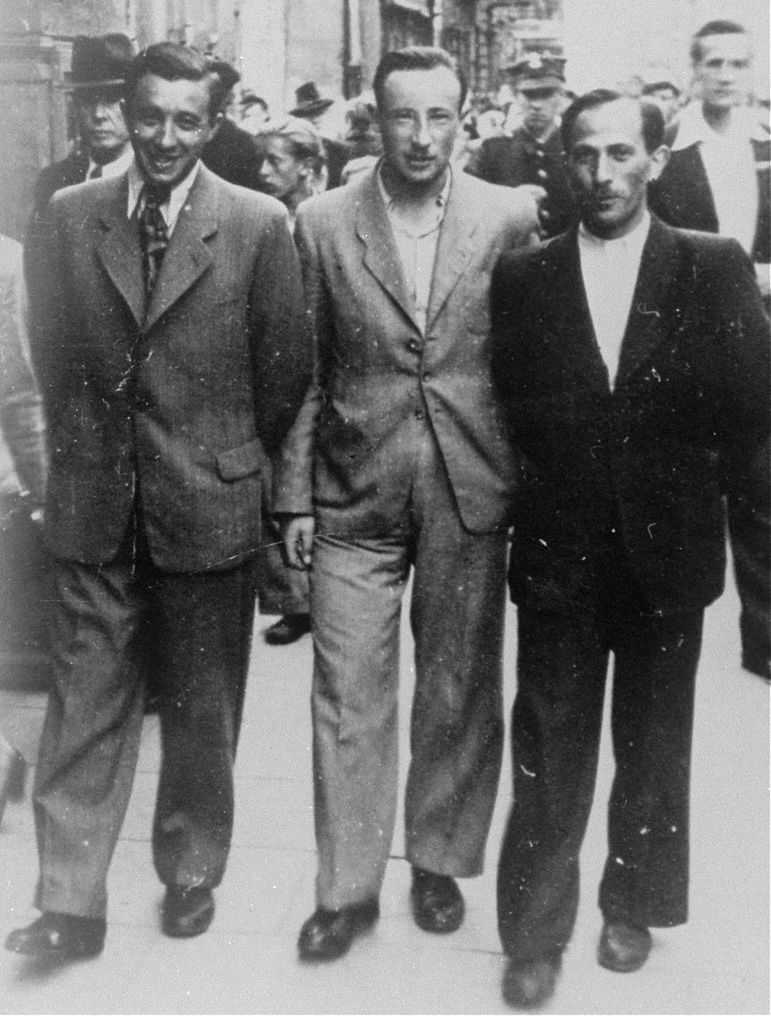
(My grandfather, Sol, in middle, alongside fellow Treblinka escapees)
My grandmother was near death at this point. When she’d arrived in Brussels, the triage doctors had deemed her hopeless and told the nurses not to bother with her. But, luckily for my family, they didn’t listen and continued to care for her.
Over the three months that Lola slowly recovered, Sol visited every day, and the two of them reminisced about their hometown, now dead to them, impossible to return to, and their mutual friends, all missing or known to have been murdered.
Sol admitted to Lola that he was still in love with his deceased girlfriend. Lola accepted this, but also hoped it would pass, eventually. When she was discharged, they married, bringing my father Abe into the world three years later, and moving to the USA three years after that.
Lola and Sol spent six decades together, until his death, but, to Lola’s chagrin, he never stopped carrying a torch for his long-dead fiancée. Lola never got over the loss of the loved ones she left behind, her mother and father in particular. Every evening, from the end of dinner until she fell asleep, Lola imagined them walking and talking along the streets of Częstochowa.
Our book’s protagonist, Maria Lani, was thirty years older than Lola, and quite possibly left Częstochowa shortly before Lola was born. But I like to imagine that as she boarded the train for Warsaw, she heard infant Lola issue her first cry from the nearby hospital. For me, the two women will always be linked by this city I’ve never been brave enough to visit.